Interindividual Behavioral Variation: Week 1
Introduction
Phenotypic and behavioral variation persists even within monomorphic populations of social organisms. In social invertebrate colonies, such individual behavioral differences—frequently conceptualized as animal "personality" or behavioral syndromes—can underpin ergonomic division of labor and collective foraging strategies.
In this study, we investigated whether consistent inter-individual variation in boldness and aggression correlates with body size in the social spider genus Stegodyphus. We simulated predatory threat and tactile competition to quantify behavioral responses.
Primary Hypothesis: Larger individuals exhibit greater physiological resilience, translating to increased boldness and higher aggressiveness, manifesting as a positive correlation between boldness and aggression.
Materials and Methods
Materials
- 6 social spiders (Stegodyphus sp.)
- Petri dishes, soft camel-hair brushes, fine forceps
- 10 mL syringes for pneumatic puffs
- Digital stopwatches and blunt tactile probes
- Multi-color acrylic non-toxic paint for individual identification
- Millimeter graph paper for optical scale calibration
Methods
Cephalothorax Length & Somatic Size
Cephalothorax length was measured as a proxy for body size. Each spider was imaged in an open petri dish atop calibrated graph paper, and lengths were extracted in Fiji.
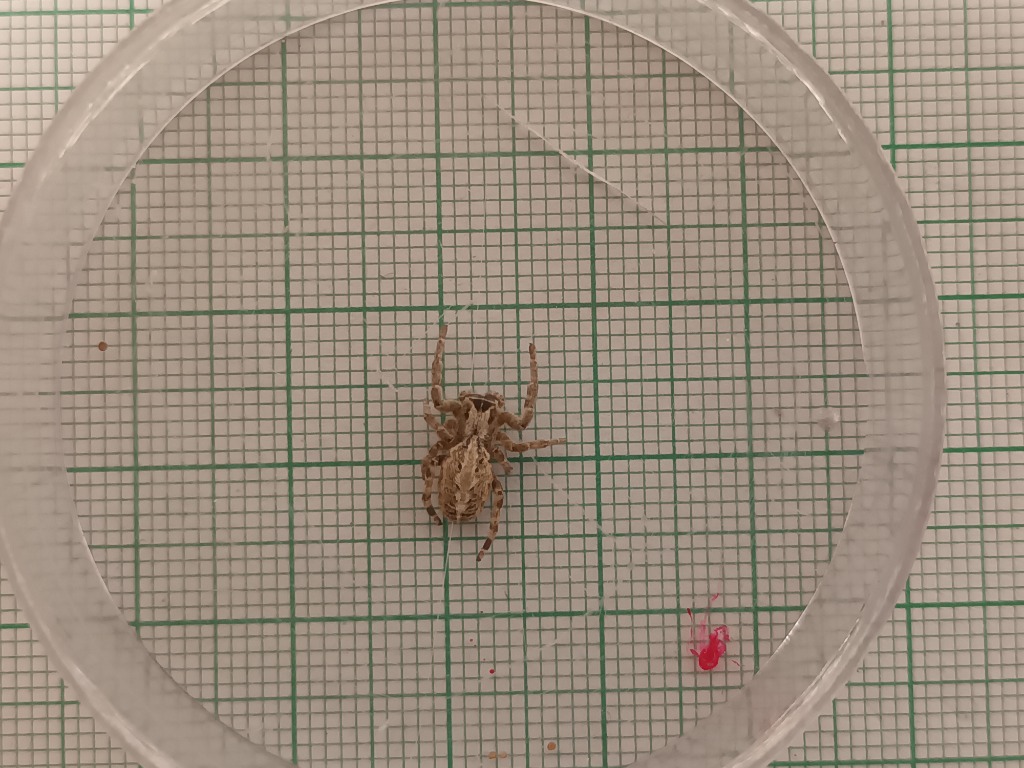
Figure 1: Stegodyphus specimen positioned on calibrated grid paper for cephalothorax measurement.
Boldness Assay (Anti-Predatory Huddling Recovery)
Boldness was quantified by measuring latency to recover from simulated avian predation (rapid air puffs from an air syringe). In response to aerodynamic disturbance, spiders contract into an immobile huddle. Latency to uncurl and resume locomotor exploration was recorded (cutoff threshold: 600 seconds):
Higher scores denote greater boldness (rapid recovery), while lower scores represent shy phenotypes.
Aggression Assay
Tactile defense was scored by prodding the abdominal cuticle with a blunt probe, scored along an ordinal behavioral response scale:
| Response | Score | Description |
|---|---|---|
| Huddle | 1 | Tight protective leg curl |
| Run | 2 | Rapid evasive displacement |
| Walk | 3 | Calm directional walking |
| Lurch | 4 | Forward lunging movement |
| No response | 5 | Neutral indifference |
| Leg Raise | 6 | Active threat display (front legs elevated) |
Data
| ID | Cephalothorax Length (cm) | Boldness Time (s) | Boldness Score (s) | Aggression Score | Behavioural Response |
|---|---|---|---|---|---|
| 1 | 0.222 | 60 | 540 | 1 | Huddle |
| 2 | 0.284 | 57 | 543 | 1 | Huddle |
| 3 | 0.334 | 23 | 577 | 1 | Huddle |
| 4 | 0.255 | 20 | 580 | 3 | Walk |
| 5 | 0.463 | 69 | 531 | 3 | Walk |
| 6 | 0.253 | 64 | 536 | 6 | Leg raise |
Results
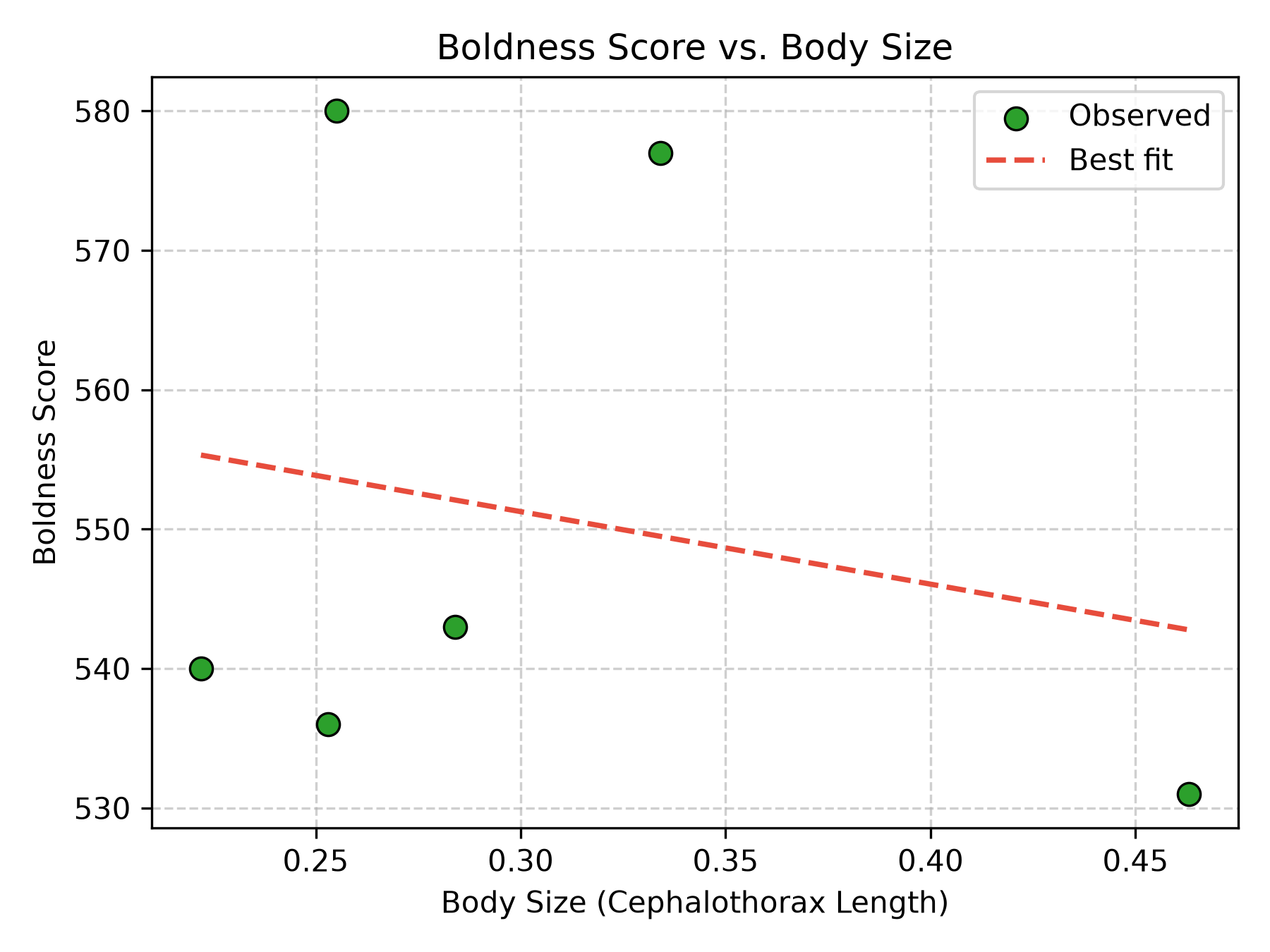 | 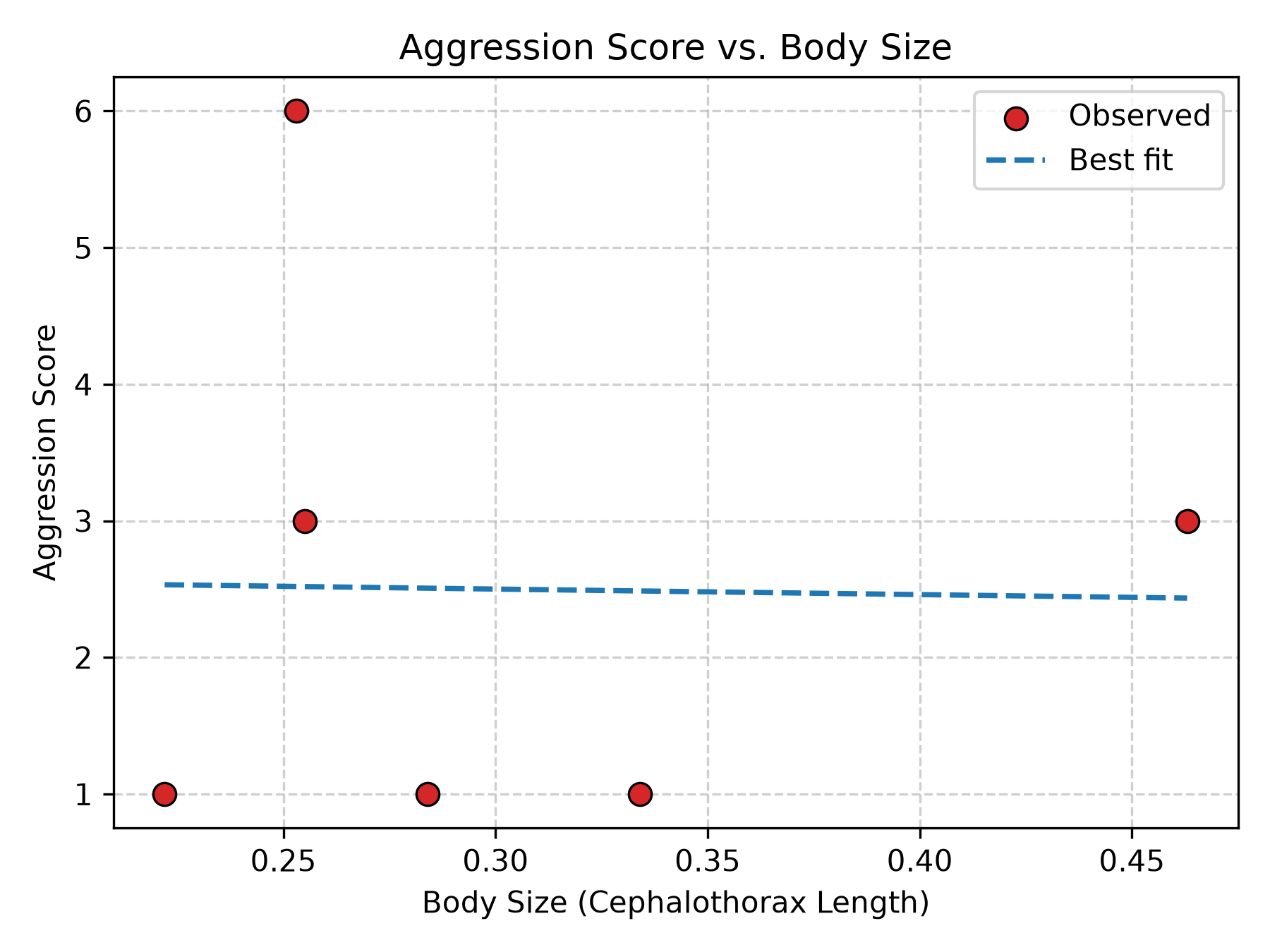 |
|---|---|
| Boldness score vs. cephalothorax length | Aggression score vs. cephalothorax length |
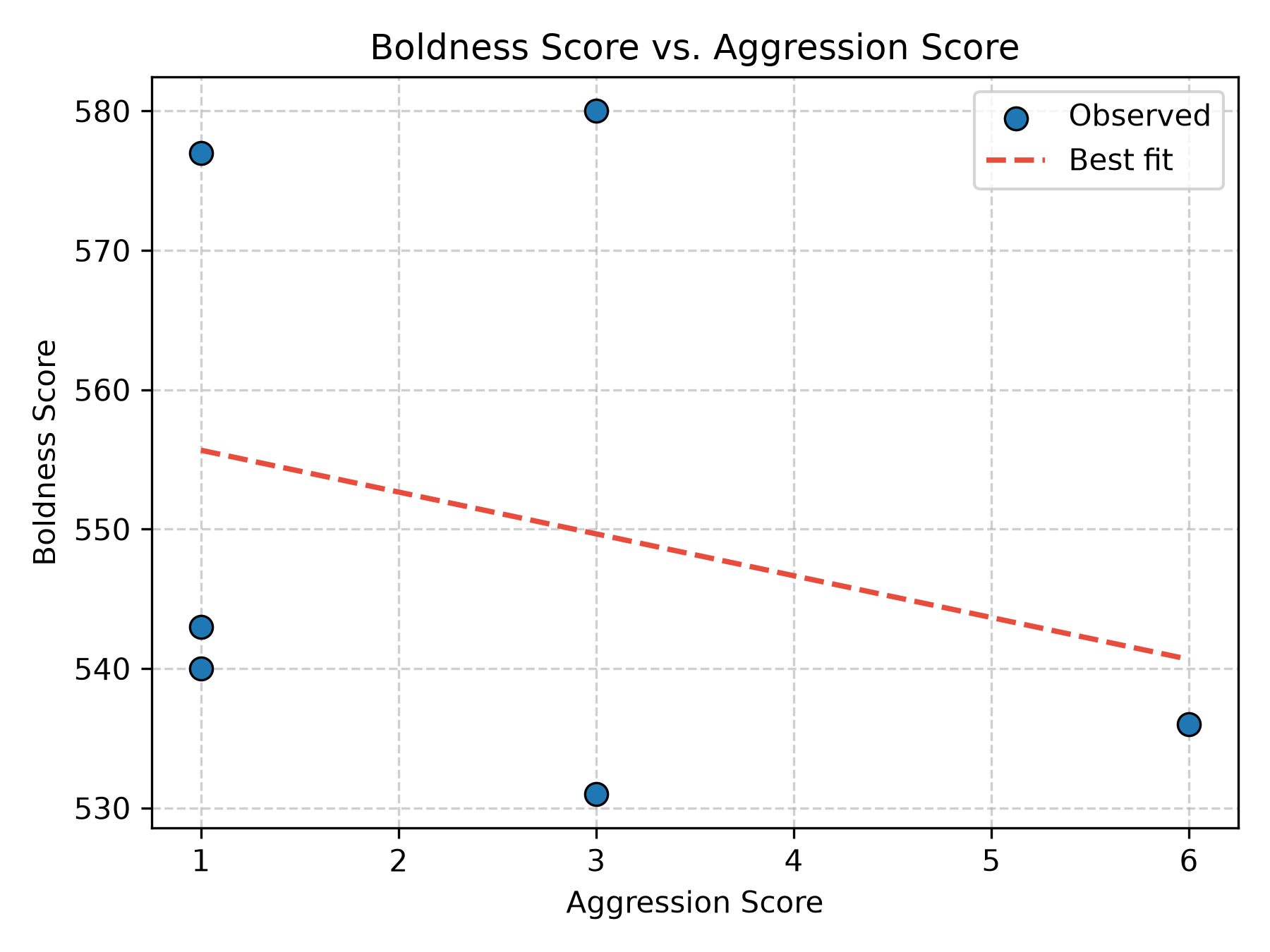 | 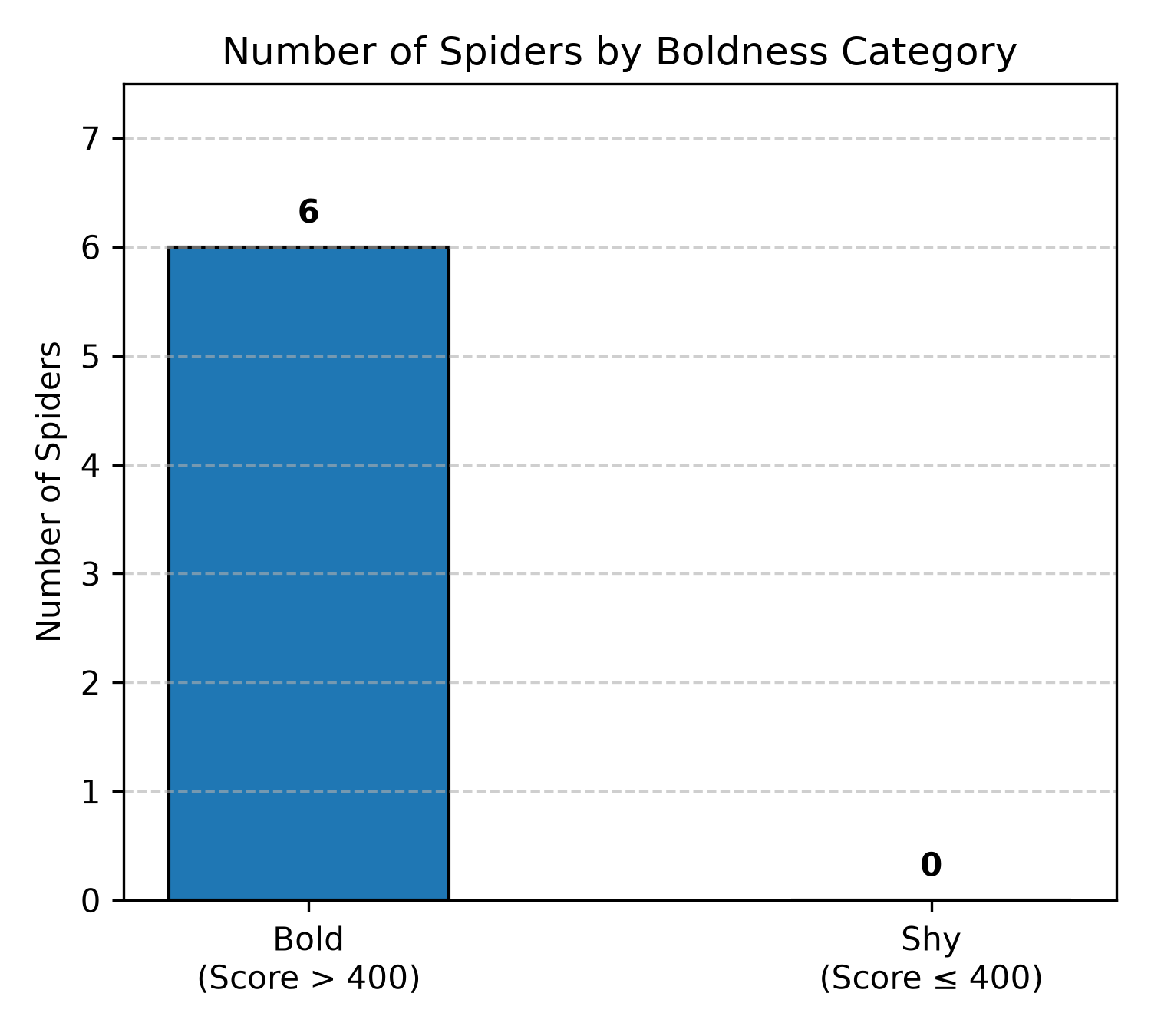 |
| Boldness score vs. aggression score | Classification distribution (Bold |
Discussion
Contrary to initial hypotheses:
- Boldness vs. Body Size: Boldness exhibited a weak negative trend with cephalothorax length rather than positive scaling.
- Aggression vs. Body Size: No discernible correlation was detected between body size and threat posture intensity.
- Syndrome Coupling: Boldness scores exhibited a slight negative association with aggression.
- Cohort Skew: All 6 tested spiders fell comfortably into the "bold" classification (
), indicating that baseline communal laboratory handling or small cohort size ( ) created an attenuated phenotypic range requiring longitudinal multi-week tracking.
References
- Pruitt, J.N. and Riechert, S.E. (2011). How within-group behavioural variation may influence social dynamics. Animal Behaviour, 82(1), pp. 141–148.
- Sih, A., Bell, A. and Johnson, J.C. (2004). Behavioral syndromes: an ecological and evolutionary overview. Trends in Ecology & Evolution, 19(7), pp. 372–378.